

Commercial Snow Removal Contract Checklist: The Fine Print That Saves Your Winter Budget

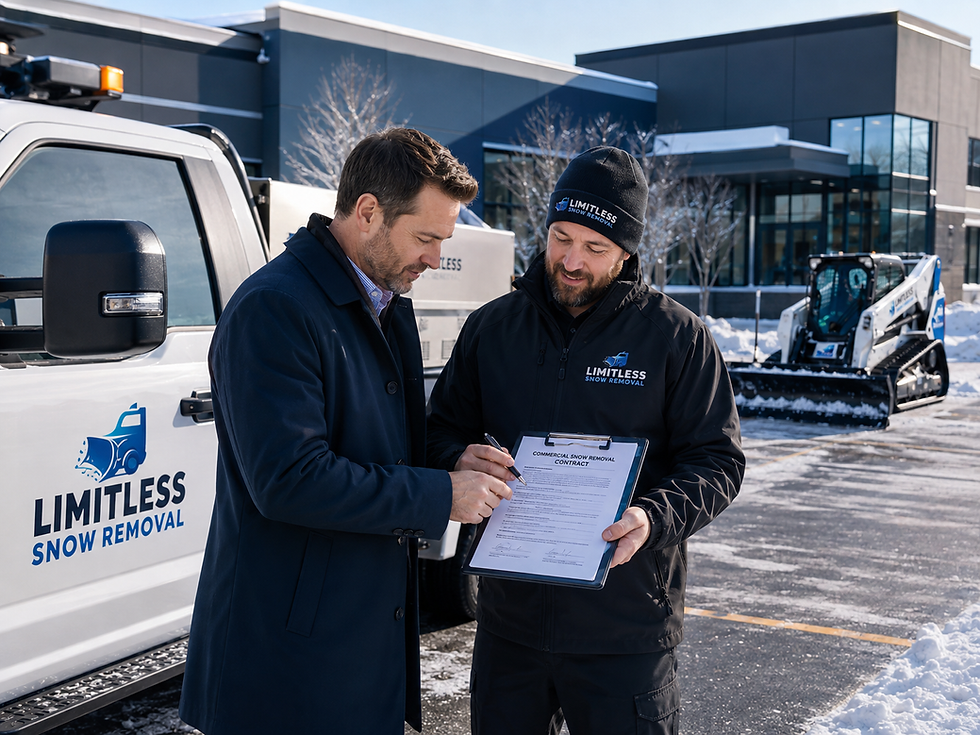
Reliable Storm Response for Business Properties Starts With a Written Scope
A commercial snow removal contract should not feel like a mystery document.
If it only says the contractor will “clear snow,” that is not enough. Clear from where? At what depth? Before what time? Does that include sidewalks? Ramps? Loading areas? Salt? Return visits?
These are not small details once the first serious storm arrives.
Reliable storm response for business properties starts with a written scope that names the real areas people use every day. Parking stalls, drive lanes, entrances, walkways, stairs, ramps, delivery lanes, garbage access, fire routes, and accessible paths should all be listed if they matter to the property.
The contract should also say what is not included. Maybe roof clearing is excluded. Maybe off-site hauling costs extra. Maybe blocked parking spaces cannot be serviced. That is fine, as long as everyone knows before winter begins.
A good contract does not just protect the contractor. It protects the property manager from confusion, surprise costs, and awkward phone calls when tenants ask why one area was missed.
A Good Contract Should Match the Property, Not a Template
Every commercial site has its own trouble spots.
One property has a tight back lane. Another has a ramp that freezes before the rest of the lot. Another has a loading dock that must stay open before sunrise. A generic contract will miss those details.
That is why a simple property map can be more useful than a long paragraph of legal wording.
The map should show service zones, snow storage areas, drainage problems, pedestrian routes, priority entrances, and areas where heavy equipment should not go. It should also mark curbs, islands, bollards, wheel stops, low walls, utility covers, and landscaping that may disappear under snow.
For a property using a Vancouver & North Shore storm response service, this matters even more when slopes, shaded pavement, parkade ramps, and coastal winter conditions can change how crews approach the site.
Without a map, crews may still work hard, but they may not work in the order the property actually needs.
Service Triggers, Timing, and Priority Rules
The contract should answer one very practical question: when does service begin?
This is where many snow contracts become unclear. One person expects a truck as soon as flakes start falling. The contractor may be waiting for the trigger depth. By the time both sides realize they expected different things, the lot is already messy.
For commercial winter access support in Surrey & White Rock, timing can be a major part of the service because customers, tenants, deliveries, and staff may all depend on early access.
Trigger Depth Should Be Specific
A trigger depth is the amount of accumulation that starts service.
The contract should name the exact depth and explain where it is measured. It should also say whether freezing rain, drifting snow, or ice can trigger service even when snowfall is light.
A storage yard may not need the same trigger as a medical building, retail plaza, strata property, or busy commercial site. The right trigger should match the actual risk.
Response Time Should Not Be Vague
Words like “fast” and “prompt” sound good, but they are hard to measure.
A stronger contract defines response windows clearly. That may include service after the trigger is reached, after snowfall ends, before business opening, during overnight storms, or after a freeze-thaw event.
It should also explain priority. If a contractor has many sites on the route, where does this property fit? Is 24/7 response included? Are return visits part of the plan?
Those answers matter when the storm is still active and everyone wants service at once.
The Best Contract Feels Like a Winter Operating Plan
A strong commercial snow removal contract does more than name a price.
It explains the property, service zones, trigger depth, response timing, equipment approach, ice-control plan, documentation process, billing structure, exclusions, and communication expectations.
For property managers comparing snow clearing plans for Richmond commercial sites, the goal should not be to find the shortest contract. It should be to find the clearest one.
Before signing, ask practical questions. What areas are included? What starts service? How quickly will crews respond? Is salting part of the plan? Where will snow be stored? When does hauling cost extra? How are visits documented? Who approves extra work?
A contract should make winter easier, not harder.
If the agreement feels unclear in calm weather, it will feel worse during a storm. Clear scope, clear standards, and clear pricing help protect the property, the budget, and the people who need safe access every day.
Pricing Should Be Clear Before the First Invoice Arrives
Snow removal pricing can be seasonal, per-push, per-event, hourly, per-inch, or a mix of several models.
None of those options is automatically wrong. The problem starts when the contract does not explain what the price actually includes.
Is salting included or billed separately? Are sidewalks part of the base service? Does after-hours work cost more? What happens during a heavy storm that needs multiple visits? When does snow hauling become necessary? How are extra services approved?
These are the questions that keep a winter budget from turning into a guessing game.
This is where Limitless Snow Removal fits naturally into the conversation. The company offers fast, reliable snow clearing, modern equipment, 24/7 service, safety-focused ice control, transparent pricing, and convenient scheduled plans.
For commercial properties, that kind of clarity turns a quote into a working winter plan. It gives property managers something they can review, explain, and rely on when weather gets complicated.
A contract should not make the first invoice the moment where everyone finally understands the deal.

Ice Control and Documentation Deserve Their Own Space
Snow clearing gets most of the attention, but ice is often the bigger problem.
A parking lot can look clean and still be risky. Meltwater can run across a walkway, settle near an entrance, and freeze after dark. A ramp can be plowed and still become slick. A shaded area can stay icy long after the rest of the site looks fine.
That is why ice control should be written into the contract, not assumed.
Salting and De-Icing Need Details
The agreement should say whether salting, sanding, brining, or de-icing is included.
It should also define which surfaces are treated, when materials are applied, what products are used, and whether repeat applications are included. This matters during wet snow, freezing rain, and overnight temperature drops.
Service Records Help Everyone
Documentation is not just paperwork for the sake of paperwork.
Photos, timestamps, service logs, GPS notes, and material records help property managers confirm what was done. They also help answer complaints and review whether the plan worked after a storm.
Damage should be covered too. Pre-season marking can reduce damage to curbs, wheel stops, signs, landscaping, and irrigation. The contract should explain how damage is reported and who handles repairs.


Comments